Mega Tycoon: Build Coin World
- 4.7
- Rating
- 50.00K
- Installs
- Free
- Price

 Analysis by App-foxy
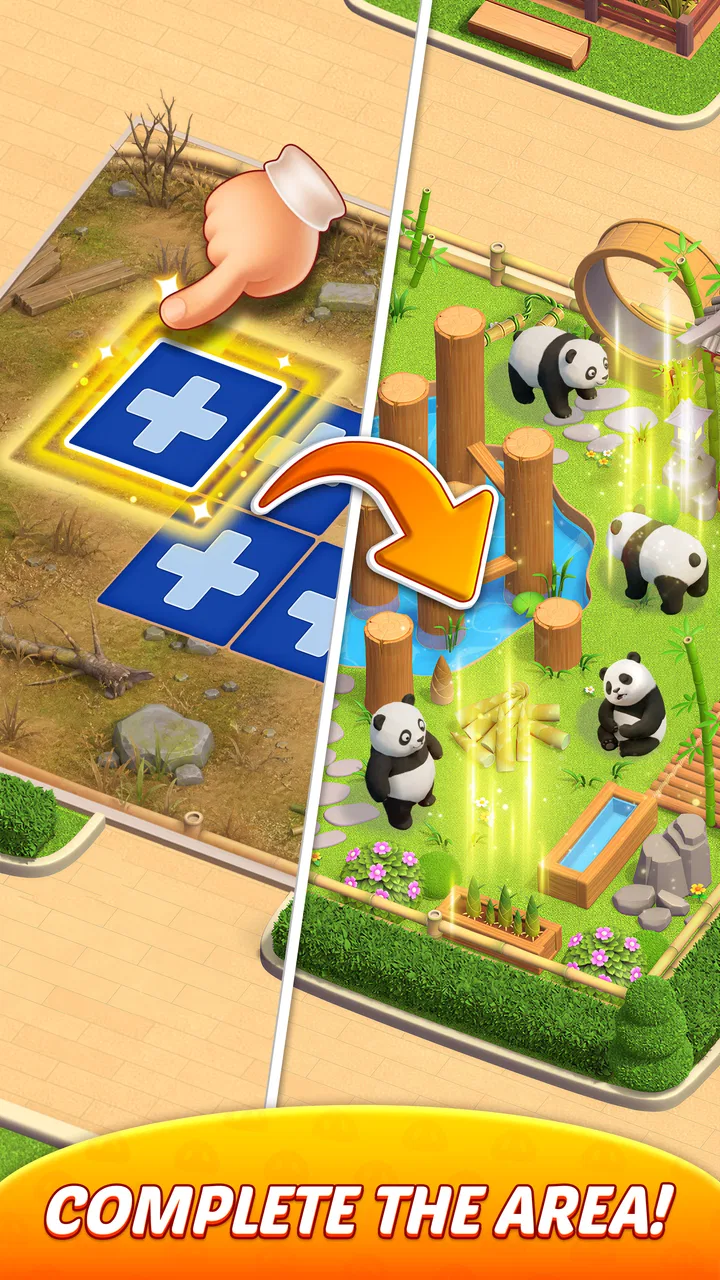
I approached Mega Tycoon: Build Coin World as a light, casual management game rather than a deep business simulator. Its central idea is appealing: begin with a zoo and gradually turn that small attraction into something much larger, with the long-term ambition of running a global theme park. That gives the game an easy-to-understand direction, and I could immediately see why it would suit short sessions on a phone.
Play2Ever Games presents the experience as a free game for players aged Everyone 10+, and it is available for devices running Android 7.0 or later. The current release is version 0.76, while the game has already passed 50 thousand installs. Its average score sits at 4.7 from more than 700 ratings, with dozens of written reviews. Those figures suggest that the basic loop is connecting with players, although a high score alone does not answer the more important question: whether the game stays enjoyable once progress slows or spending becomes tempting.
How the zoo-to-theme-park journey feels in practice
The strongest part of the concept is its sense of direction. I like games that give me a clear starting point and a visible reason to keep improving. Here, the small-zoo beginning creates a satisfying contrast with the promised end goal. Instead of asking me to understand a complicated economy immediately, the premise gives me a simple mental picture: improve the attraction, earn more, expand the business, and work toward a much bigger entertainment destination.
You May Also Like

 Pandora - Music & Podcasts
Pandora’s Music Is Easy to Start, but Harder to Recover
Pandora’s strength is its low-effort path from a seed to a station. Its weak spot is how much confidence it asks you to place in connection, setup, and quiet recovery.

 8 Ball Pool
 Is Built on Rivalries, Rematches, and Routine
A close look at the rivalries, rematches, shared routines, and unanswered safety questions that turn a quick pool match into a persistent mobile community.

 Samsung Music
’s Quiet Strength Is Playing What You Already Own
Its reach comes less from spectacle than from dependable access to a personal library. That simplicity is both the app’s strongest retention engine and its ceiling.

 AccuWeather: Weather Radar
AccuWeather Review: A Quick, Clear Forecast for Everyday Decisions
For everyday plans, the best forecast is the one you can understand quickly. AccuWeather makes rain timing, radar, and local conditions easy to act on, with a few trade-offs.

 Hill Climb Racing
Why Hill Climb Racing Still Turns Crashes Into One More Run
A tiny car, a bumpy hill and one more upgrade: Hill Climb Racing keeps resurfacing because its simple chaos makes every near-miss feel personal.

 AliExpress - Shopping App
AliExpress Makes Global Shopping Feel Personal, but Shoppers Bear the Risk
AliExpress turns a global marketplace into a pocket-sized discovery engine. Its reach is useful, its shopping loop compelling, and its trade-offs easy to miss.
More From Our News Desk
View All News


That simplicity is useful for casual players. You do not need to approach it like a spreadsheet or commit to a long uninterrupted session. It is the kind of game I would open while waiting for an appointment, during a short break, or at the end of the day when I wanted something more interactive than scrolling. The theme also makes the progression easier to follow than an abstract business game because every improvement is tied to a recognizable entertainment setting.
My main advice is to treat the opening stage as a learning period rather than rushing toward the biggest possible park. In a tycoon game, early resources are usually most valuable when they improve the rhythm of future progress, not when they produce a flashy but isolated upgrade. I would first pay attention to what consistently helps the attraction grow, then spend on changes that support that pattern. This approach makes the game feel more deliberate and reduces the frustration of reaching a point where every next step feels expensive.
That is also where the game’s casual identity matters. I would not choose this title expecting the detailed staff management, complex logistics, or highly granular construction options found in more serious simulation games. Its appeal is the broad arc from modest attraction to ambitious park, not necessarily the fine control of every operational detail. Players who enjoy quick decisions and visible expansion will probably find the format approachable. Players who want a realistic theme-park simulator may find the design too streamlined.
Progress is enjoyable, but pacing deserves attention
The natural question for any free tycoon game is how long the progress remains comfortable without paying. Mega Tycoon is free to download and play, but it includes in-app purchases ranging from $0.99 to $399.99 per item. That is a very wide spending range, and it changes how I evaluate the progression. The presence of purchases does not automatically make the game unfair, but it does mean that I would play with a firm personal budget and avoid treating every offer as part of the normal route forward.
For me, the best way to handle a game with this purchase structure is to separate two goals: learning the economy and accelerating it. If I spend before understanding which improvements actually matter, I may be paying to move faster without knowing whether I am moving in a useful direction. I would play the early stages naturally, notice where progress begins to feel slower, and only then decide whether the game still feels enjoyable at that pace.
This is a practical distinction for everyday use. Imagine opening the game after work, making a few improvements, and then seeing a purchase that promises a quicker route to expansion. If I am playing for relaxation, the slower route may be perfectly acceptable. If I am trying to reach a particular milestone during a short session, the offer may look more attractive. The important point is that convenience and necessity are not the same thing. I would not assume that a purchase is required simply because it is prominently presented.
A second useful habit is to judge progress by decisions rather than by the size of the park alone. If I am still choosing between improvements and thinking about how to build momentum, the game is giving me something to do even when expansion is gradual. If each session becomes little more than waiting for enough resources or repeatedly considering a purchase, the value of the free experience becomes weaker. That is the point at which I would either take longer breaks between sessions or stop playing.
The version number also matters when considering the game’s feel over time. Version 0.76 indicates an actively evolving release rather than a product I would assume is completely settled. That can be positive because a developing game may improve its balance and presentation. It also means I would keep expectations realistic: the experience may change, and a progression rhythm that feels comfortable now could be adjusted in a later update.
Spending pressure and the importance of a personal limit
I appreciate that the purchase information is clear enough to show the broad range, but the upper end deserves serious caution. An item priced at $399.99 is not a small impulse purchase, even though the game itself is free. I would never recommend entering payment details casually in a game built around repeated progress decisions. Anyone sharing a device with children should be especially careful, because the Everyone 10+ rating makes the game accessible to younger players while the purchase range can reach far beyond ordinary pocket-money spending.
My preferred approach would be to decide on a maximum before playing, then regard anything outside that limit as unavailable. That keeps the game’s economy from setting the terms of the experience. It also makes it easier to tell whether I genuinely enjoy the management loop or only enjoy the feeling of accelerated progress after paying. A free game should be allowed to remain free in practical use, not just in the download step.
I would also avoid judging the game solely by how quickly a paying player can expand. The fair comparison is between the free route and the amount of entertainment it provides. If the game gives me satisfying choices and a reason to return without spending, it can still be worthwhile. If it repeatedly makes ordinary progress feel like a problem that money solves, then I would consider that a meaningful weakness, even if the park-building theme remains attractive.
Is the experience fair between spenders and non-spenders?
Fairness is difficult to assess from the purchase range alone. The game clearly offers optional paid items, but the available facts do not establish whether purchases affect competition, unlock exclusive advantages, shorten timers, or simply provide convenience. I would therefore avoid calling it pay-to-win, but I would also avoid assuming that every player has exactly the same experience. The responsible conclusion is more limited: spending is part of the design, and the effect of that spending should be evaluated by playing carefully rather than guessed from the existence of a shop.
This distinction matters because “competitive fairness” means something different in a personal tycoon game than in a multiplayer battle game. If the main satisfaction comes from building my own park, a paid shortcut may primarily change my pace. If the game later compares players directly, then the same shortcut could matter much more. Since I would not want to invent a competitive system that is not established, I would judge the title primarily as a personal progression game and keep my expectations modest about competition.
For a fair personal challenge, I would set my own rules. I might play without purchases for several sessions, record mentally which improvements feel meaningful, and decide whether the free route gives enough control. I would also resist comparing my park’s size with players who may have chosen to spend heavily. In a tycoon game, that comparison can turn a relaxing activity into a race I never agreed to enter.
One non-obvious trade-off is that a purchase can reduce the very decision-making that makes a management game interesting. Accelerating expansion may feel rewarding at first, but if it removes the need to choose carefully between improvements, it can flatten the strategy. I would only consider spending if it preserved the choices I enjoy, rather than replacing them with a faster sequence of unlocks. That is a personal judgement, but it is an important one for this particular type of game.
Who will enjoy it, and who should look elsewhere?
I would recommend Mega Tycoon to someone who likes casual growth games, colorful business themes, and the satisfaction of turning a modest starting point into a larger destination. It is especially suitable for players who prefer a clear long-term fantasy without the demands of a complex simulator. The zoo-to-theme-park idea gives the game an accessible identity, and the free entry point makes it easy to test without committing money at the start.
It could also work well for a player who enjoys checking in regularly rather than playing for hours. A short-session routine might be enough: open the game, review the current state of the attraction, make one or two considered improvements, and leave before the experience starts to feel repetitive. That rhythm is healthier than trying to force constant progress, especially when paid acceleration is available.
I would skip it if I wanted a detailed construction sandbox, a realistic economic simulation, or a game where every feature is designed around competitive balance. I would also be cautious if I know I am easily drawn into buying progress. The combination of a free game and purchases reaching $399.99 per item makes self-control part of the user experience. Someone looking for a completely purchase-free game would be better served by a paid title with no optional spending or by a simpler offline game built around a fixed price.
Compared with the usual alternatives in the casual tycoon category, this game’s advantage is its approachable theme and straightforward expansion fantasy. More elaborate alternatives may offer deeper customization or a larger set of management systems, but they can also demand more time and attention. Mega Tycoon is the better fit when I want the feeling of running a growing attraction without turning every session into an administrative task. The trade-off is that a simpler structure may provide fewer meaningful choices for experienced simulation fans.
What I would check before committing to long-term play
I would pay attention to three things during the first several sessions. First, does the game let me make a meaningful choice each time I return, or am I mostly collecting and waiting? Second, does the free route continue to feel coherent once the initial excitement of expansion fades? Third, do paid offers feel like optional conveniences, or are they repeatedly placed between me and ordinary progress?
These checks answer more than a rating can. A 4.7 average from over 700 ratings is encouraging, and the install count shows that the title has reached a substantial early audience, but neither figure tells me whether the game suits my tolerance for waiting or spending. I would use the positive reception as a reason to try it, not as a guarantee that its pacing will match my preferences.
I would also watch how updates affect the experience. Because the current version is 0.76, I would expect the balance and presentation to remain capable of change. That is not automatically a problem, but it means I would avoid buying an expensive item on the assumption that the current progression will remain identical. For a free game, patience is valuable: play first, understand the loop, and let the experience prove that it deserves more of your time.
Another practical question is whether the age rating matches the person who will use the device. The game is rated Everyone 10+, so families should treat it as suitable for that age range while still discussing in-app spending. The rating describes the intended content level, not a guarantee that a child will understand the consequences of a purchase. I would use device-level purchase protections and make the spending rule clear before handing the game to a younger player.
My trust verdict after weighing the value
My overall view is cautiously positive. The core premise is easy to understand, the casual format makes it approachable, and the journey from a small zoo toward a global theme park gives the game a stronger identity than a completely abstract coin-collecting title. I can imagine returning to it for short, low-pressure sessions, especially when I want gradual progress rather than a demanding challenge.
The main reservation is not the existence of purchases but their scale. A free game can be perfectly enjoyable, yet the presence of items reaching $399.99 means I would not recommend playing without a spending boundary. I would also avoid promising that the game is equally satisfying for everyone, because the value depends heavily on how comfortable a player is with gradual progress and optional acceleration.
My practical recommendation is to try it as a free casual tycoon first, not as a purchase-driven shortcut to a huge park. Give the early progression enough time to show whether its decisions are enjoyable. If the attraction remains fun without spending, the game has earned a place in a casual rotation. If the main appeal becomes the ability to pay for faster growth, I would move on to a different management game with a clearer fixed-cost model.
In the end, Mega Tycoon works best when I treat the park as a personal project rather than a race. Play2Ever Games has chosen a friendly, accessible theme, and the free entry point lowers the barrier to trying it. Just keep the purchase range in mind, protect younger players from accidental spending, and decide based on the quality of the free loop. With those boundaries, it is a reasonable choice for casual builders who enjoy watching a small attraction gradually become something much bigger.
FAQs for Mega Tycoon: Build Coin World
01What is Mega Tycoon: Build Coin World?
Mega Tycoon: Build Coin World is a casual construction and management game centered on expanding a personal coin-themed world. Players typically collect currency, unlock new areas, place buildings or attractions, and improve their virtual economy over time. Its accessible mechanics make it suitable for short play sessions, while the gradual progression gives players reasons to return and continue upgrading their growing tycoon empire.
02How do you play Mega Tycoon: Build Coin World?
Gameplay focuses on earning coins and reinvesting them into your world. You generally begin with a small area and use the available resources to construct facilities, unlock additional zones, and increase your income. As the world develops, upgrades become more important because they can improve production and unlock new content. The experience is easy to understand, although efficient spending and regular progress help you advance faster.
03Is Mega Tycoon: Build Coin World free to download?
Mega Tycoon: Build Coin World can generally be downloaded without an upfront purchase, but the exact availability and payment model may depend on whether you use Android or iOS. Like many free-to-play tycoon games, it may include optional in-app purchases for currency, boosts, or other convenience items. Check the store listing before downloading, especially if the device is used by children or has purchase restrictions disabled.
04Does Mega Tycoon: Build Coin World require an internet connection?
An internet connection may be needed for certain parts of Mega Tycoon: Build Coin World, such as advertisements, cloud-related features, updates, event content, or purchase verification. Basic building and progression could work during some offline sessions, but this can vary by version and device. For the most reliable experience, launch the game online first and review its behavior before depending on it during travel or in areas without connectivity.
05Is Mega Tycoon: Build Coin World suitable for children?
The simple construction and coin-collecting gameplay is generally approachable for younger players, and there is no requirement for advanced gaming skills. However, parents should review the age rating, advertising practices, privacy information, and in-app purchase settings before allowing children to play. Free-to-play progression can encourage repeated sessions or optional spending, so parental controls are recommended if the game is installed on a shared or child-managed device.
Pros
- Simple controls make it easy for casual players to start building.
- Short play sessions work well for quick breaks or mobile gaming.
- Progression gives players clear goals to work toward.
- Bright visuals make the tycoon world easy to navigate.
- Idle earnings can provide rewards even when you are away.
Cons
- Frequent ads may interrupt gameplay or slow down progress.
- Advancement can feel repetitive after extended play sessions.
- Some upgrades may require considerable time or in-app purchases.
- The game may become less engaging once the main goals are completed.
- Performance can vary on older phones with limited memory.

Mega Tycoon: Build Coin World
Gallery